Brush, Ink, and Smiles: A Wonderful Shodo Workshop Today!
Today we had another wonderful Shodo (Japanese calligraphy) workshop, and my heart is very full. The energy in the room was fantastic, and I want to share a little bit about our beautiful time together.
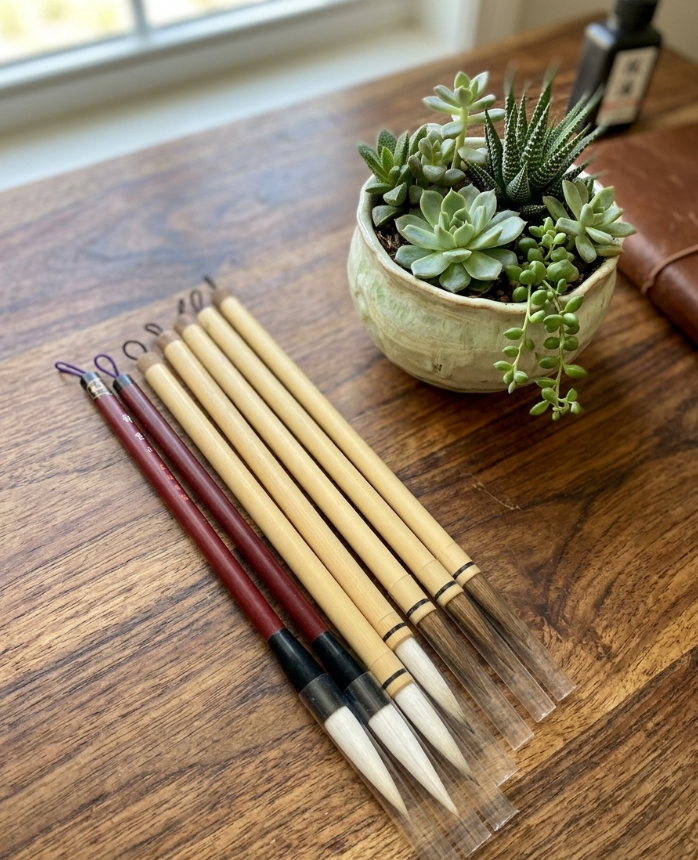
This workshop was extra special for us. We recently went back home to Japan to catch up with our family, which was so lovely. While we were there, we visited some of the best traditional stationery stores in Japan and bought brand new, high-quality calligraphy brushes.
Today was the first time using them, and the students were so excited! Many of them even wanted to purchase their own authentic brush straight from Japan to keep practicing at home, which made me very happy. Having the right tool makes such a big difference.
Kakizome — Writing the First Character of the New Year
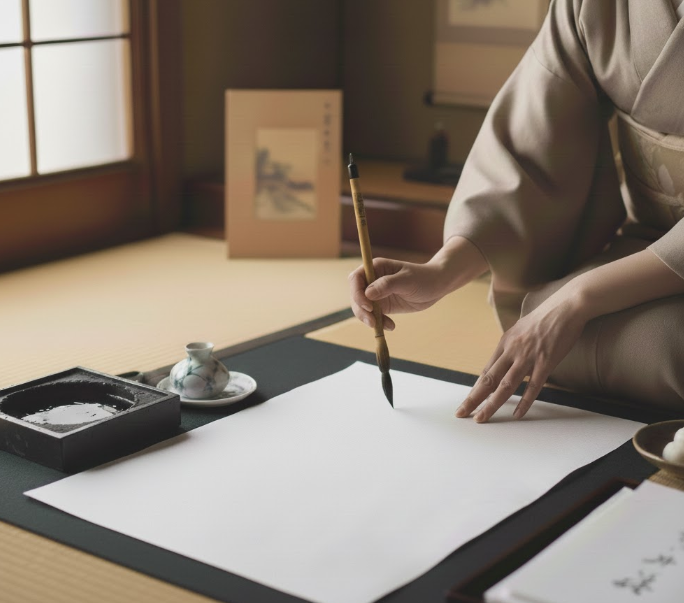
January 2nd is traditionally known in Japan as kakizome, the first calligraphy of the year.
Kakizome is the practice of writing a character or word at the beginning of the new year, carrying one’s thoughts and hopes into the months ahead. Its origins are said to date back to the Heian period, around 794, when members of the imperial court would write poems and waka at the start of the year. As time passed, the tradition continued to evolve.
At the End of the Year, with a Brush in Hand
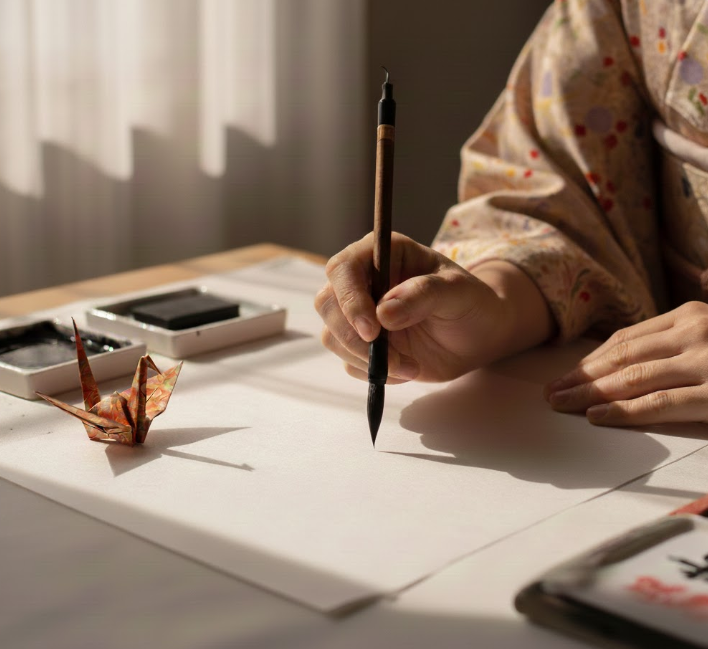
Today is December 31.
As the year came to an end, we took a quiet moment to sit with brush and paper. Calligraphy isn’t about writing perfectly.
It reflects how we are breathing, how we are feeling, right in that moment. Even uneven lines have meaning ,they simply show where we are today. What stays with us is not the result, but the time we spent being present.

The Empty Space That Speaks — The Zen of Ma (間) in Calligraphy
In Japanese calligraphy, beauty doesn’t only lie in the black ink lines. It lives just as deeply in the empty spaces—the Ma (間).
Ma is more than just “space” or “pause.” It is the breath between strokes, the silence between sounds, and the stillness that allows movement to exist. Without Ma, every line would clash, and every word would lose meaning.

The Line That Changed Japanese Calligraphy
In the 15th century, in a quiet temple on Japan’s western coast, a young monk named Sesshū Tōyō was wrestling with the art of shodō — Japanese calligraphy. The temple was part of a strict Zen order where silence, repetition, and self-discipline shaped every day. Monks woke before dawn, meditated for hours, and practiced brushwork as a form of meditation rather than art.
For Sesshū, this discipline was both a calling and a struggle. He had natural talent — his brushstrokes carried energy and movement — but his teacher saw them as undisciplined. To master shodō, one had to quiet the self completely, letting the brush move without ego or emotion. Sesshū’s strokes, by contrast, betrayed too much spirit.

The Mindful Brush: How Japanese Calligraphy (Shodō) Became the Ultimate Stress-Relief Practice
Japanese brush writing, a powerful moving meditation, uses the uncorrectable stroke to demand 100% present focus, enabling you to quiet your mind and channel your life energy; at Orizuru, we teach this process in our monthly classes in Brisbane to help you find inner harmony.